


Drug Intervention Help: When and How to Help a Loved One

Watching someone you love struggle with drug addiction can leave you feeling helpless, frustrated, and unsure of what to do next. You may have tried conversations, offered support, or even issued ultimatums without seeing lasting change. This is where drug intervention help can make a meaningful difference. A well-planned intervention is more than a difficult conversation. It’s a structured process that helps a person recognize how substance use is affecting their health, relationships, career, and future while presenting a clear path toward treatment. When planned carefully—and often with professional guidance—an intervention can become the turning point that leads someone toward recovery. Evidence-based treatment, early intervention, and family involvement are recognized as important components of addressing substance use disorders. What Is Drug Intervention Help? Quick Answer (Featured Snippet) Drug intervention help is the process of organizing a structured conversation that encourages someone with a substance use disorder to accept professional treatment. It often involves family members, close friends, and an experienced intervention specialist who guides the discussion, manages emotions, and helps develop a treatment plan. Unlike spontaneous confrontations, a planned intervention follows a clear strategy. Its purpose is not to shame or punish someone. Instead, it aims to: The goal is to replace denial with awareness while maintaining respect and compassion. How Do You Know It’s Time for an Intervention? Many families wait too long because they hope things will improve on their own. Unfortunately, substance use disorders often become more severe without treatment. Behavioral Signs You may notice: One sign alone may not indicate addiction, but several together deserve attention. Physical Signs Depending on the substance, you may observe: Because symptoms vary by substance, a healthcare professional should evaluate concerns rather than relying on assumptions. Financial and Legal Signs Addiction often creates problems beyond health. These may include: When multiple warning signs appear together, delaying action may increase health and safety risks. Is an Intervention Always the Right Choice? Not necessarily. One of the biggest misconceptions is that every addiction requires a formal intervention. Sometimes a private conversation, medical evaluation, or counseling appointment is the better first step. Consider an Intervention When: ✅ The person repeatedly refuses treatment ✅ Family members are enabling the addiction ✅ Drug use continues despite serious consequences ✅ Safety concerns are increasing ✅ Relationships are deteriorating ✅ Previous conversations have failed Expert Insight Many families believe they must “wait until rock bottom.” That idea isn’t supported by modern addiction treatment. Earlier intervention often creates more opportunities for recovery before consequences become even more severe. National public health strategies emphasize increasing early screening, intervention, and access to treatment rather than waiting for addiction to worsen. What Happens During a Drug Intervention? Although every intervention is unique, most follow four stages. Step 1: Preparation Preparation is often the most important part. Families work together to: This planning reduces the chance that emotions will derail the conversation. Step 2: The Intervention Meeting Each participant calmly explains: The conversation should focus on observable behaviors rather than blame or personal attacks. For example: Instead of saying: “You’ve ruined everyone’s life.” A more productive statement would be: “I’ve seen how difficult it has become for you to keep your job, and I’m worried about your health.” Specific observations are harder to dismiss than accusations. Step 3: Present Immediate Treatment Options One mistake many families make is waiting until after the intervention to look for treatment. Instead, arrangements should already be prepared. This may include: The easier the transition, the greater the likelihood that the person will accept help. Step 4: Establish Healthy Boundaries Boundaries are not punishments. They clarify what family members will—and will not—do moving forward. Examples include: Healthy boundaries protect everyone involved while supporting long-term recovery. Professional vs. DIY Intervention Many families wonder whether they should organize an intervention themselves or hire a professional interventionist. The right choice depends on the complexity of the situation, the person’s behavior, and the family’s experience. Factor DIY Intervention Professional Intervention Planning Family handles all preparation Guided by an experienced interventionist Emotional Management Can become confrontational Neutral facilitator keeps discussion productive Treatment Planning Family researches options Treatment is coordinated in advance Safety May be difficult in high-risk situations Better equipped to manage crisis situations Success Potential Varies based on preparation Often more structured and organized When Professional Help Is Recommended Professional intervention assistance may be especially valuable when: An experienced interventionist can help reduce emotional escalation and keep everyone focused on the shared goal: helping the individual enter treatment. Step-by-Step Guide to Planning a Drug Intervention Step 1: Learn About Addiction Before approaching your loved one, understand that addiction is a complex medical condition—not simply a lack of willpower. Learning about substance use disorders helps families replace judgment with informed support. Step 2: Build the Right Team Invite only people who: Avoid including people who may become argumentative or unsupportive. Step 3: Research Treatment Options Don’t wait until after the intervention. Prepare: Removing barriers makes it easier for your loved one to say yes. Step 4: Practice Together Every participant should rehearse: Practice helps everyone stay focused if the conversation becomes difficult. Step 5: Hold the Intervention Choose: Keep the conversation respectful, calm, and focused on concern rather than blame. Step 6: Act Immediately If treatment is accepted, avoid delays. Whenever possible: Delays can increase the chance that the individual changes their mind. Family Readiness Checklist Before scheduling an intervention, ask yourself: ✔ Have we researched treatment programs? ✔ Are all participants committed to the same message? ✔ Have we planned healthy boundaries? ✔ Are transportation and logistics arranged? ✔ Are we prepared if our loved one initially refuses help? ✔ Have we considered professional guidance? If you answered “no” to several questions, additional planning may improve the intervention’s effectiveness. Common Mistakes Families Make Even well-intentioned families can unintentionally reduce the effectiveness of an intervention. 1. Waiting Too Long Many hope the problem will resolve itself. Early action often provides more treatment options and may reduce the risk of further harm. 2.
Intervention Specialist: Role, Training & When to Hire One

When someone you care about is struggling with addiction or another serious behavioral health issue, it’s natural to want to help. But repeated conversations, ultimatums, or emotional pleas often don’t lead to lasting change. In many cases, families reach a point where professional guidance becomes essential. That’s where an intervention specialist can make a meaningful difference. An intervention specialist brings structure, objectivity, and experience to an emotionally charged situation. They help families communicate effectively, reduce conflict, and create a plan that encourages a loved one to accept treatment. This guide explains what intervention specialists do, when to hire one, how the intervention process works, and what to look for when choosing the right professional. Quick Answer: What Is an Intervention Specialist? An intervention specialist is a trained professional who helps families encourage a loved one to accept treatment for addiction, substance use disorders, or certain mental health conditions. They assess the situation, prepare family members, facilitate a structured intervention, and coordinate the transition into appropriate treatment and ongoing support. What Does an Intervention Specialist Do? An intervention specialist does much more than lead a single meeting. Their work often begins days or weeks before the intervention and continues after the individual enters treatment. Their responsibilities generally include: Rather than confronting someone with anger or blame, the goal is to create a respectful, organized conversation focused on encouraging positive change. Who Can Benefit from an Intervention Specialist? Although intervention specialists are commonly associated with substance use disorders, they may also help families dealing with: Every situation is different. A qualified intervention specialist determines whether a formal intervention is appropriate or whether another approach may be more effective. When Should You Hire an Intervention Specialist? Many families wait until a crisis occurs before seeking professional help. In reality, earlier intervention often creates more opportunities for recovery. Consider contacting an intervention specialist if your loved one: When Immediate Emergency Care Is Needed A professional intervention is not a substitute for emergency medical care. Call emergency services immediately if the individual: Safety always comes first. The Intervention Process: Step by Step Every intervention is tailored to the family’s circumstances, but most follow a structured process. Step 1: Initial Assessment The intervention specialist gathers information about: This assessment helps determine the most appropriate intervention strategy. Step 2: Family Preparation Preparation is often the most important phase. Family members learn: Each participant typically prepares a personal statement expressing concern without judgment or blame. Expert Tip: Successful interventions focus on specific behaviors and their impact rather than labeling or criticizing the individual. Step 3: Developing the Treatment Plan Before the intervention takes place, the specialist helps arrange the next steps if the individual agrees to treatment. Planning may include: Having these details in place reduces delays that could lead to second thoughts. Step 4: Conducting the Intervention The intervention itself is a carefully facilitated conversation. The specialist helps participants: The individual is invited—not forced—to accept treatment. Step 5: Transition to Treatment If treatment is accepted, the intervention specialist often coordinates a smooth transition to the chosen facility. This may include: Reducing logistical barriers increases the likelihood that treatment begins immediately. Step 6: Family Follow-Up Recovery affects the entire family. Many specialists recommend continued support through: Long-term recovery is more successful when the family also adopts healthier patterns. Intervention Specialist vs. Therapist vs. Recovery Coach Role Primary Focus Best Time to Involve Intervention Specialist Motivates treatment acceptance and coordinates intervention Before treatment begins Therapist Provides counseling and mental health treatment During and after recovery Recovery Coach Offers practical support and accountability After treatment starts or during recovery These professionals often work together, each serving a distinct role in the recovery journey. What Qualifications Should You Look For? Choosing the right intervention specialist requires more than checking a website. Look for professionals who have: Ask about their experience with cases similar to yours rather than focusing only on years in practice. Questions to Ask Before Hiring an Intervention Specialist Use these questions during your initial consultation: Their answers should be clear, transparent, and tailored to your family’s needs. How Much Does an Intervention Specialist Cost? Costs vary based on factors such as: Some specialists charge a flat fee, while others bill based on the scope of services provided. Instead of focusing only on price, evaluate the overall value, including preparation, treatment coordination, and aftercare support. Common Mistakes Families Make Even with the best intentions, certain approaches can reduce the effectiveness of an intervention. Avoid these common mistakes: Consistency is one of the strongest predictors of a successful intervention process. Expert Tips for a More Effective Intervention ✔ Choose a calm, private setting. ✔ Ensure all participants understand the plan beforehand. ✔ Speak from personal experience rather than making accusations. ✔ Focus on hope and recovery, not punishment. ✔ Have treatment arrangements ready before the meeting. ✔ Prepare for different outcomes, including refusal. ✔ Continue supporting recovery after treatment begins. Family Readiness Checklist Before scheduling an intervention, ask yourself: If you answered “no” to several of these questions, additional preparation may improve the likelihood of success. Decision Guide: Is It Time to Contact an Intervention Specialist? Situation Recommended Action Loved one acknowledges the problem and is seeking help Assist with treatment options; a formal intervention may not be necessary. Loved one repeatedly refuses treatment despite serious consequences Consult an intervention specialist to assess whether a structured intervention is appropriate. Family communication has become hostile or unproductive Seek professional guidance to rebuild communication before the situation escalates. There is an overdose, suicidal behavior, or immediate danger Contact emergency services immediately. Address the crisis first; consider an intervention later if appropriate. Final Thoughts Addiction and other serious behavioral challenges rarely affect one person alone. They influence relationships, routines, finances, and emotional well-being across the entire family. An experienced intervention specialist helps families move from frustration and uncertainty to a structured plan focused on recovery. By providing preparation, guidance, and coordinated treatment planning, they can improve communication and reduce the obstacles that
Professional Intervention Services: When, Why & How They Help

When someone you care about is struggling with addiction, alcohol misuse, or a serious mental health condition, it can feel like every conversation ends the same way—with denial, frustration, or broken promises. Families often try to help on their own, but without a structured plan, emotions can quickly take over. This is where professional intervention services can make a meaningful difference. A trained interventionist provides guidance, structure, and support throughout the process, helping families communicate effectively while increasing the likelihood that their loved one will accept treatment. Professional intervention services aren’t about confrontation or ultimatums—they’re about creating a safe, organized opportunity for change. In this guide, you’ll learn: What Are Professional Intervention Services? Quick Answer Professional intervention services are structured programs led by trained intervention specialists who help families encourage a loved one to enter treatment for addiction, mental health concerns, or other harmful behaviors through careful planning, coaching, and coordinated care. Unlike an emotional family meeting, a professional intervention follows a proven process designed to reduce conflict while improving communication. Most services include: The goal isn’t to force someone into treatment. Instead, it’s to help them recognize the impact of their behavior and make an informed decision to accept professional care. Why Families Often Struggle Without Professional Guidance Many families wait months—or even years—before seeking outside help. During that time, they may unknowingly fall into patterns that make recovery more difficult. Common examples include: These responses usually come from love and concern. However, they can unintentionally enable harmful behaviors. A professional interventionist helps families replace emotional reactions with a thoughtful, consistent plan. Expert Insight: Successful interventions often begin with helping the family change its communication and boundaries—not just focusing on the individual in crisis. When Should You Consider Professional Intervention Services? One of the biggest misconceptions is that an intervention should only happen after someone has “hit rock bottom.” In reality, earlier intervention can reduce the physical, emotional, financial, and legal consequences associated with untreated addiction or mental health conditions. Signs Related to Substance Use Professional intervention services may be appropriate if your loved one: Signs Related to Mental Health Intervention services may also be helpful when someone: Mental health interventions require careful planning and should always consider the individual’s safety, medical history, and current level of risk. Warning Signs That Families Shouldn’t Ignore Consider seeking professional guidance if your family experiences: Waiting for a crisis often makes treatment more complicated. Seeking help earlier creates more opportunities for a positive outcome. What Does a Professional Interventionist Actually Do? Many people assume an interventionist simply moderates a family meeting. In reality, the intervention meeting is only one part of a much larger process. 1. Initial Assessment The interventionist gathers information about: This assessment helps determine whether an intervention is appropriate and identifies the best approach for the situation. 2. Educating the Family Families often benefit from understanding: Education helps participants approach the intervention with greater confidence and consistency. 3. Creating a Personalized Plan Every family is different. A professional interventionist develops a customized strategy based on factors such as: There is no universal script. A tailored plan is far more effective than a one-size-fits-all approach. 4. Preparing Participants Preparation is one of the most important parts of the process. Participants are coached on: Many interventionists also help family members write thoughtful letters that express concern without judgment. 5. Coordinating Treatment Planning doesn’t stop when someone agrees to get help. Professional intervention services often include: Removing logistical barriers makes it easier for the individual to transition directly into care. 6. Supporting the Family Afterward Recovery affects the entire family—not just the individual receiving treatment. Many intervention professionals recommend ongoing support through: Long-term family involvement can strengthen the recovery process and encourage healthier relationships. How the Professional Intervention Process Works Although every situation is unique, most interventions follow a structured sequence. Stage What Happens Why It Matters Initial Consultation Review the situation and determine goals Builds a clear strategy Assessment Gather background information Identifies risks and needs Family Preparation Educate and coach participants Reduces conflict Planning Develop intervention logistics Creates consistency Intervention Meeting Conduct the guided conversation Encourages treatment acceptance Treatment Transition Coordinate admission and transportation Maintains momentum Follow-Up Support family after treatment begins Reinforces long-term recovery This structured approach helps reduce uncertainty and allows everyone involved to understand their role before emotions run high. DIY Intervention vs. Professional Intervention Services Some families consider organizing an intervention on their own. While this may seem more convenient, it can be difficult to manage complex emotions, resistance, and treatment logistics without professional support. Factor DIY Intervention Professional Intervention Services Planning Often informal Structured and personalized Emotional Management Challenging Guided by a trained facilitator Communication Can become confrontational Focuses on calm, respectful dialogue Treatment Coordination Family manages logistics Specialist coordinates next steps Crisis Response Limited preparation Risk assessment and contingency planning Family Education Minimal Comprehensive coaching and guidance Types of Professional Intervention Services Not every intervention addresses the same challenges. Professional interventionists tailor their approach based on the individual’s circumstances, family dynamics, and treatment needs. Addiction Intervention Services These interventions focus on helping individuals who are struggling with alcohol or drug dependency recognize the need for treatment. Common situations include: The interventionist works closely with the family to develop a treatment plan that aligns with the individual’s clinical needs. Mental Health Intervention Services When someone refuses treatment for a serious mental health condition, families may feel unsure how to respond. A mental health intervention can help encourage treatment for conditions such as: Because each situation is unique, intervention planning should account for safety concerns, medical history, and the recommendations of qualified healthcare professionals. Dual Diagnosis Interventions Many individuals experience both a substance use disorder and a mental health condition. These cases often require: Choosing a treatment program equipped to address both conditions can improve continuity of care. Family-Focused Interventions Sometimes the primary goal is to help the family change unhealthy patterns while encouraging the loved one to seek treatment. These interventions emphasize: Common Mistakes
Family Addiction Intervention: A Complete Guide to Helping a Loved One Accept Treatment

Watching someone you love struggle with addiction is heartbreaking. Whether it’s alcohol, prescription medication, opioids, or illicit drugs, addiction often affects the entire family—not just the person using substances. Many families wait until a crisis occurs before taking action. Unfortunately, delaying help can allow addiction to worsen, increasing the risk of health problems, legal issues, damaged relationships, and overdose. A family addiction intervention provides a structured, compassionate way to encourage a loved one to accept professional treatment before the situation becomes even more serious. This guide explains how interventions work, when they are appropriate, how to prepare effectively, and why professional guidance can make a significant difference. Quick Answer A family addiction intervention is a carefully planned meeting in which family members and close friends encourage a loved one to seek treatment for substance use disorder. The goal is to communicate concern without blame, present a clear treatment plan, and establish healthy boundaries if treatment is declined. What Is a Family Addiction Intervention? A family addiction intervention is more than simply confronting someone about their substance use. It is a structured conversation designed to help the individual recognize the impact of addiction while offering a realistic path toward recovery. Unlike emotional confrontations that often escalate into arguments, a successful intervention focuses on empathy, preparation, and solutions. The primary objectives include: An intervention is not about punishment or forcing someone to change. Instead, it creates an opportunity for informed decision-making while demonstrating that recovery is possible with the right support. How Addiction Affects the Entire Family Addiction rarely impacts only one person. It changes family dynamics, communication patterns, finances, and emotional well-being. Understanding these effects helps explain why family involvement is often an essential part of recovery. Emotional Stress Family members frequently experience: Parents may constantly worry about overdose, while spouses often feel isolated and emotionally exhausted. Children living with addiction may experience confusion, insecurity, and long-term emotional challenges. Financial Problems Substance use disorders often create significant financial strain. Examples include: Families sometimes unknowingly enable addiction by repeatedly covering these expenses. Damaged Relationships Trust is often one of the first casualties of addiction. Common issues include: Over time, even strong relationships may become strained without appropriate intervention. Enabling Behaviors One of the most overlooked aspects of addiction is enabling. Enabling occurs when well-intentioned actions unintentionally make it easier for addiction to continue. Examples include: Recognizing enabling behaviors allows families to replace them with healthier forms of support. Signs It’s Time for a Family Addiction Intervention Many families wonder whether they are overreacting or waiting too long. While every situation is different, several warning signs suggest it may be time to consider an intervention. Your Loved One Denies Having a Problem Denial is one of the defining characteristics of addiction. Even when substance use clearly affects health, work, or relationships, the individual may minimize or dismiss the issue. Repeated Failed Attempts to Quit If someone has repeatedly promised to stop using substances but continues to relapse without professional treatment, outside help may be necessary. Repeated unsuccessful attempts often indicate that addiction has progressed beyond willpower alone. Increasing Risk-Taking Behavior Examples include: These situations increase the urgency for intervention. Family Members Are Constantly in Crisis Mode If every day revolves around managing addiction-related emergencies, the family may benefit from a structured intervention. Living in constant crisis is emotionally exhausting and unsustainable. Should You Hire a Professional Interventionist? Some families successfully conduct interventions independently. However, professional interventionists provide valuable expertise, particularly when addiction is severe or family dynamics are complicated. Professional guidance may reduce conflict, improve communication, and increase the likelihood that the individual accepts treatment. Benefits of Professional Support Experienced interventionists help families: Perhaps most importantly, they help keep the discussion focused on recovery rather than blame. When Professional Help Is Strongly Recommended Consider working with a professional interventionist if: These situations often require specialized planning and crisis management. Expert Insight One of the biggest mistakes families make is believing the intervention itself creates recovery. In reality, the intervention is only the beginning. The true goal is ensuring the individual enters treatment immediately afterward. Recovery depends on ongoing professional care, family involvement, accountability, and long-term support—not on a single conversation alone. How to Prepare for a Successful Family Addiction Intervention Preparation is the difference between an emotional confrontation and a productive intervention. Rather than speaking spontaneously, every detail should be thoughtfully planned. 1. Build the Right Intervention Team Choose people your loved one respects and trusts. A smaller, focused group is usually more effective than a large gathering. Consider including: Avoid inviting people who: Expert Tip: Every participant should have the same goal: encouraging treatment—not winning an argument. 2. Research Treatment Before the Intervention One of the most common reasons interventions fail is that families don’t have a clear next step. Before meeting: If your loved one agrees to treatment, delaying admission by even a day can reduce the likelihood they’ll follow through. 3. Write Personal Statements Each participant should prepare a brief statement that includes: Avoid: 4. Rehearse the Intervention Practice helps everyone stay calm and focused. During rehearsal: A rehearsal can also reveal emotional triggers that need to be addressed before the actual meeting. What Happens During the Intervention? While every situation is unique, most interventions follow a similar structure. Step What Happens Opening Explain the purpose of the meeting calmly. Personal Statements Each participant shares prepared remarks. Treatment Plan Present a specific treatment option. Decision Ask for an immediate commitment to treatment. Boundaries Explain consequences if treatment is declined. Next Steps Transport the individual to treatment if they agree. The meeting should remain respectful, even if emotions run high. Common Mistakes Families Make Avoiding these mistakes can improve the chances of a successful intervention. Waiting for “Rock Bottom” Many families believe someone must lose everything before accepting help. In reality, earlier intervention often leads to better outcomes and may reduce the risk of overdose, serious health complications, or legal consequences. Making Empty Threats If family members promise consequences but
Family Interventionist: When to Hire One & What to Expect

Watching someone you love struggle with addiction, alcohol misuse, or a mental health crisis can leave your family feeling overwhelmed and uncertain. Many families want to help but aren’t sure where to start—or worry that saying the wrong thing could make matters worse. A family interventionist provides structure, guidance, and professional support during one of the most challenging moments a family can face. Their role goes beyond organizing a meeting. They help families communicate effectively, prepare for different outcomes, and create a plan that encourages treatment while preserving relationships whenever possible. This guide explains what a family interventionist does, when it’s time to seek one, how interventions work, and what to look for when choosing the right professional. What Is a Family Interventionist? Quick Definition A family interventionist is a trained professional who helps families plan and conduct structured conversations designed to encourage a loved one to accept treatment for substance use disorders, behavioral addictions, or certain mental health conditions. Unlike informal family confrontations, a professionally guided intervention follows a clear strategy based on preparation, communication, and safety. The goal isn’t to shame or force someone into treatment. Instead, it’s to create an opportunity for meaningful change by presenting consistent, compassionate, and well-planned support. Primary Responsibilities A family interventionist may: In many cases, the interventionist also serves as a bridge between the family and treatment providers, helping reduce confusion during a stressful time. How a Family Interventionist Differs from a Therapist Many people assume therapists, counselors, and interventionists perform the same role. While they may collaborate, their responsibilities are different. Professional Primary Focus Typical Role Family Interventionist Immediate treatment engagement Plans and leads interventions Therapist Emotional healing and ongoing therapy Provides counseling over time Addiction Counselor Substance use recovery support Delivers treatment and recovery counseling Case Manager Care coordination Helps organize services and resources An interventionist’s work is often concentrated around a specific crisis, while therapists and counselors generally provide ongoing treatment after the individual enters care. When Should You Hire a Family Interventionist? Families often wait until a situation feels unbearable before seeking professional help. Early intervention can sometimes improve the chances of a productive conversation and reduce the likelihood of further harm. Consider consulting a family interventionist if your loved one: Seeking guidance before a crisis escalates allows families to prepare thoughtfully rather than reacting in the moment. Common Warning Signs While every situation is unique, several patterns may indicate the need for professional intervention. Behavioral Changes Physical Signs Family Warning Signs Sometimes the family’s behaviors also signal it’s time for help. Examples include: Recognizing these patterns can help families shift from reacting to planning. How the Family Intervention Process Works A professionally led intervention follows a structured process. While every family’s circumstances are unique, most interventions include the following stages. 1. Initial Assessment The interventionist meets with key family members to understand: This assessment helps determine whether an intervention is appropriate and which approach is most likely to be effective. Expert Insight: A successful intervention starts long before everyone gathers in the same room. Careful planning often has a greater impact than the meeting itself. 2. Choosing the Right Intervention Model Different situations call for different strategies. Intervention Model Best For Key Characteristics Johnson Model Someone refusing treatment Structured meeting with a direct request to enter treatment immediately ARISE Model Families wanting a collaborative process Gradual engagement that encourages participation over time CRAFT (Community Reinforcement and Family Training) Families dealing with repeated resistance Teaches loved ones communication and behavior-change techniques without a formal confrontation A qualified family interventionist selects the approach based on the individual’s circumstances rather than relying on a single method for every case. 3. Preparing Participants Preparation is one of the most important steps. Participants may: Proper preparation helps keep the conversation calm, respectful, and focused. 4. Conducting the Intervention During the meeting, the interventionist guides the discussion by: The goal is to encourage the individual to consider treatment—not to shame or pressure them. 5. Transitioning to Treatment If the individual agrees to seek help, the interventionist often helps coordinate the next steps, such as: Reducing delays between the intervention and treatment can help maintain momentum. 6. Ongoing Family Support Recovery doesn’t end when treatment begins. Many interventionists continue supporting families by: Benefits of Hiring a Professional Family Interventionist A trained interventionist brings experience, structure, and objectivity during an emotionally difficult time. Key Benefits While no intervention can guarantee that someone will accept treatment, professional guidance can help families approach the situation more thoughtfully and safely. When an Intervention May Not Be Appropriate An intervention is not the right choice in every situation. Additional planning or immediate medical or emergency assistance may be necessary if the person: In these situations, consult healthcare professionals or emergency services before organizing an intervention. How Much Does a Family Interventionist Cost? Costs vary depending on factors such as: Rather than focusing only on price, ask what services are included, such as planning sessions, family coaching, treatment coordination, and post-intervention support. How to Choose the Right Family Interventionist Not all interventionists have the same training or experience. Consider the following factors when making your decision. Experience Ask about: Credentials Look for professionals with relevant education, certifications, or specialized training in addiction, behavioral health, counseling, or intervention services. Communication Style Choose someone who: Treatment Knowledge An experienced interventionist should understand different levels of care, including: Family Support Recovery affects everyone. Ask whether the interventionist offers: Questions to Ask Before Hiring a Family Interventionist Before making your decision, consider asking: These questions can help you understand whether the interventionist’s approach aligns with your family’s needs. Common Mistakes Families Make Families often act with good intentions, but some actions can unintentionally make recovery more difficult. Avoid These Common Mistakes ❌ Waiting too long to seek professional guidance. ❌ Arguing while emotions are running high. ❌ Making threats that won’t be enforced. ❌ Covering up consequences of substance use. ❌ Speaking without preparation. ❌ Expecting immediate change after one conversation. ❌ Ignoring
Alcohol Intervention Services: A Complete Guide for Families

Watching someone you love struggle with alcohol misuse can leave you feeling overwhelmed, frustrated, and uncertain about what to do next. Many families try heartfelt conversations, set boundaries, or issue ultimatums, only to find that nothing changes. When repeated efforts fail, professional alcohol intervention services can provide the structure, guidance, and support needed to encourage a loved one to accept treatment. A well-planned intervention is not about blame or confrontation. Instead, it is a carefully organized conversation led by a trained professional who helps family members express concern, communicate clearly, and present treatment options in a respectful and supportive environment. This guide explains how alcohol intervention services work, when they are appropriate, how to choose an experienced interventionist, and what families can expect before, during, and after the intervention process. What Are Alcohol Intervention Services? Quick Answer Alcohol intervention services are professional services designed to help families encourage a person with alcohol use disorder to recognize the impact of their drinking and accept treatment through a structured, carefully planned intervention. Unlike spontaneous confrontations, professional interventions follow a proven process that prioritizes safety, preparation, and constructive communication. Professional interventionists work closely with families to: The primary goal is not to force someone into recovery but to increase the likelihood that they willingly accept help. Why Professional Alcohol Intervention Services Matter Families often wait months—or even years—before seeking professional assistance. During this time, alcohol dependence can worsen, affecting every aspect of a person’s life. Professional intervention services help reduce emotional conflict by providing: Instead of reacting emotionally, families learn how to communicate in ways that reduce defensiveness and encourage meaningful change. When Does Someone Need Alcohol Intervention Services? Recognizing when to seek help is one of the most difficult decisions families face. While every situation is unique, several warning signs may indicate that professional intervention is appropriate. Drinking Has Become the Top Priority A person may begin neglecting responsibilities at work, school, or home because alcohol has taken precedence over other commitments. Examples include: Relationships Are Falling Apart Alcohol misuse often damages relationships with spouses, children, parents, friends, and coworkers. Common signs include: Health Problems Are Increasing Long-term alcohol misuse can contribute to serious physical and mental health concerns, including: If drinking is affecting overall health or leading to repeated medical emergencies, professional intervention may be appropriate. Legal or Financial Problems Continue Repeated alcohol-related consequences may include: Despite these consequences, many individuals continue drinking, highlighting the need for structured intervention. Previous Attempts to Quit Have Failed Many people sincerely want to stop drinking but struggle because alcohol dependence affects brain function, decision-making, and impulse control. If multiple attempts at quitting have not been successful, professional support can help bridge the gap between recognizing the problem and entering treatment. How Alcohol Intervention Services Work Professional intervention services typically follow a structured process designed to maximize the likelihood of a positive outcome. Step 1: Family Consultation The interventionist meets with close family members to understand: This assessment helps create a personalized intervention plan. Step 2: Planning the Intervention Every successful intervention begins with careful preparation. The interventionist works with participants to determine: Planning reduces confusion and helps keep the conversation focused. Step 3: Preparing Participants Participants receive coaching on how to communicate with empathy while avoiding language that may trigger defensiveness. They practice: This preparation often makes the intervention more constructive and less emotionally charged. Step 4: Conducting the Intervention On the day of the intervention, the interventionist guides the conversation, ensuring everyone has an opportunity to speak while keeping the discussion respectful and goal-oriented. The focus remains on expressing concern, outlining the impact of the person’s alcohol use, and presenting a clear path toward treatment. Types of Alcohol Intervention Services Not every intervention follows the same approach. A qualified interventionist will recommend a method based on the individual’s personality, family dynamics, and the severity of alcohol use. 1. Johnson Model Intervention The Johnson Model is one of the most widely used intervention approaches in the United States. Family members and close friends meet with the individual in a planned session led by an interventionist. During the meeting, participants: Best for: Individuals who are in denial about their alcohol use but still maintain relationships with family and friends. 2. Invitational Model Instead of surprising the individual, the Invitational Model invites them into the planning process. This collaborative approach encourages open communication and can reduce feelings of ambush. Benefits include: Best for: Individuals who acknowledge some concerns but have not yet committed to treatment. 3. Family Systems Intervention Alcohol misuse rarely affects only one person. The Family Systems approach views addiction as something that impacts the entire household. In addition to helping the individual, the interventionist works with family members to address: This model often includes ongoing family counseling before and after treatment. 4. Crisis Intervention Sometimes immediate action is necessary due to urgent circumstances such as: In these situations, intervention services may coordinate with medical professionals or emergency responders to prioritize safety before treatment planning. Important: If there is an immediate risk of harm to the individual or others, contact emergency services rather than waiting to arrange an intervention. Benefits of Hiring Professional Alcohol Intervention Services Families often wonder whether they can organize an intervention themselves. While every family is different, working with a trained interventionist offers several advantages. Professional Guidance Emotions often run high during conversations about addiction. An experienced interventionist helps keep the discussion productive, respectful, and focused on recovery. Better Preparation Professional intervention services typically include: This preparation reduces confusion and helps everyone approach the meeting with confidence. Immediate Treatment Coordination One of the biggest reasons interventions fail is the lack of a clear next step. Professional interventionists often help families: Having these details in place allows the individual to enter treatment as soon as they agree. Support for the Entire Family Alcohol addiction affects spouses, parents, children, siblings, and close friends. Intervention services often provide guidance for the entire family, helping everyone establish healthier communication and boundaries during the
Drug Intervention Services: How They Work & When to Call

Watching someone you love struggle with drug addiction can leave you feeling overwhelmed, frustrated, and unsure of what to do next. You may have tried heartfelt conversations, offered support, or even issued ultimatums, only to watch the cycle continue. When these efforts fail, drug intervention services can provide a structured, compassionate way to encourage your loved one to accept professional treatment. Unlike emotional confrontations, a professionally guided intervention is carefully planned to reduce conflict, improve communication, and increase the likelihood that the individual will agree to enter a treatment program. This guide explains how drug intervention services work, when they’re appropriate, what to expect throughout the process, and how to choose the right professional to help your family take this important step. What Are Drug Intervention Services? Quick Answer Drug intervention services are professional services that help families plan and conduct a structured conversation designed to encourage someone with a substance use disorder to accept treatment. The goal isn’t to shame or force someone into recovery. Instead, it creates an opportunity for honest communication in a supportive environment while presenting a clear path toward professional care. Professional intervention services often include: Every situation is unique. An experienced interventionist tailors the approach based on factors such as the individual’s substance use, mental health, family dynamics, and readiness for change. When Should You Consider Drug Intervention Services? Many families wait until the situation reaches a crisis before seeking help. While an intervention can be effective during a crisis, early action often provides better opportunities for recovery. Consider professional intervention services if your loved one: If conversations consistently end in arguments, avoidance, or broken promises, professional guidance may help shift the discussion toward meaningful action. Signs Addiction May Require Immediate Intervention Certain warning signs suggest that delaying help could increase the risk of serious harm. These include: In these situations, consulting an experienced intervention professional as soon as possible can help families evaluate the safest next steps. Who Provides Drug Intervention Services? Drug intervention services are typically led by professionals with specialized training in addiction, family systems, communication, and crisis management. Depending on the situation, the intervention team may include: Professional Interventionists These specialists facilitate structured intervention meetings, prepare family members, and coordinate treatment planning. Addiction Counselors Licensed counselors help assess substance use disorders and recommend appropriate levels of care. Behavioral Health Professionals When mental health conditions such as depression, anxiety, bipolar disorder, or trauma are involved, behavioral health professionals may contribute valuable clinical insight. Treatment Coordinators Many intervention services also assist families with finding detox programs, residential treatment, outpatient care, or continuing recovery resources. How the Drug Intervention Process Works Although every intervention is personalized, most professional drug intervention services follow a structured process. Step 1: Initial Consultation The interventionist meets with family members to understand: This information helps create a customized intervention plan rather than relying on a one-size-fits-all approach. Step 2: Family Preparation Preparation is one of the most important parts of a successful intervention. Families learn how to: Careful preparation helps reduce conflict and keeps the conversation focused on recovery rather than past disagreements. Step 3: Planning the Intervention The interventionist works with the family to determine: Having treatment arranged in advance helps minimize delays if the individual agrees to seek help. Step 4: Conducting the Intervention On the day of the intervention, the professional interventionist guides the conversation to keep it respectful, focused, and productive. The meeting usually includes close family members, trusted friends, or others who have a meaningful relationship with the individual. Each participant shares prepared statements that: The interventionist helps manage emotional reactions, redirects conversations if they become confrontational, and ensures the focus remains on the opportunity for recovery. Expert Tip: The objective isn’t to “win” an argument—it’s to help the person recognize the need for treatment and feel supported in taking the next step. Step 5: Immediate Transition to Treatment One of the biggest advantages of professional drug intervention services is that treatment arrangements are typically made before the intervention takes place. If the individual agrees to receive help, the transition can happen immediately. This may include: Removing delays between acceptance and admission reduces the likelihood of second thoughts. Step 6: Family Aftercare Recovery doesn’t end once treatment begins. Families often benefit from ongoing support, including: Healing the family system is an important part of long-term recovery. Professional vs. Family-Led Intervention Feature Professional Intervention Family-Led Intervention Planning Structured and personalized Often informal Emotional Management Guided by an expert Can become emotional quickly Family Coaching Included Usually limited Crisis Management Professional support Limited experience Treatment Coordination Arranged beforehand Family handles logistics Success Potential Often higher due to preparation Depends on family dynamics While some families choose to conduct interventions themselves, professional guidance can be especially valuable when addiction is severe, emotions run high, or previous attempts have been unsuccessful. Benefits of Drug Intervention Services Working with a trained interventionist offers several advantages: Objective Guidance A neutral professional can help families communicate more effectively and reduce emotionally charged interactions. Personalized Planning Every addiction story is different. Professional intervention services tailor strategies based on the individual’s needs, family dynamics, and treatment goals. Improved Communication Families learn how to replace confrontation with constructive conversations that encourage change. Treatment Coordination An interventionist can help identify appropriate treatment options and coordinate admission, making it easier to act quickly when the individual agrees to seek help. Ongoing Family Support Many services continue supporting families after the intervention through education, counseling referrals, and recovery planning. Common Mistakes Families Make Even with the best intentions, certain actions can reduce the effectiveness of an intervention. Waiting Too Long Families sometimes delay action while hoping the person will change on their own. Early intervention may prevent further harm. Arguing About the Addiction Trying to prove someone has a problem often leads to defensiveness instead of meaningful discussion. Making Empty Ultimatums Consequences should be realistic and consistently enforced. Empty threats can damage trust and reduce credibility. Focusing on Blame Interventions work best when they emphasize
Addiction Intervention Services: Complete Guide to Helping a Loved One Accept Treatment

Watching someone struggle with addiction can leave families feeling helpless, frustrated, and uncertain about what to do next. Many people believe that simply asking their loved one to seek treatment is enough. Unfortunately, addiction often affects judgment, making it difficult for individuals to recognize the severity of their condition. This is where addiction intervention services can make a meaningful difference. Professional intervention services help families organize a structured, compassionate conversation designed to encourage a loved one to accept treatment. Rather than relying on emotional confrontations or ultimatums, these services use evidence-based approaches to increase the likelihood of treatment acceptance while protecting family relationships. Whether your loved one is struggling with alcohol, prescription medications, opioids, or illicit drugs, understanding how intervention services work can help you make informed decisions during a difficult time. Quick Answer Addiction intervention services are professional programs that help families encourage a loved one with substance use disorder to enter treatment. These services typically include assessment, planning, family coaching, the intervention meeting, treatment placement, and ongoing support throughout the recovery process. What Are Addiction Intervention Services? Addiction intervention services are professional programs led by trained interventionists who guide families through the process of encouraging someone with substance use disorder to accept treatment. Unlike spontaneous family confrontations, professional interventions are carefully planned. Every participant understands their role, communication strategies are practiced in advance, and treatment arrangements are often made before the intervention takes place. The goal is not to shame or punish the individual. Instead, it is to present clear concerns, establish healthy boundaries, and offer immediate access to appropriate treatment. Why Families Often Need Professional Help Addiction affects more than the individual—it impacts the entire family. Over time, loved ones may unintentionally enable unhealthy behaviors or struggle to communicate effectively because of fear, guilt, or emotional exhaustion. A professional interventionist provides an objective perspective and helps families: This structured approach often reduces the risk of the conversation escalating into arguments or withdrawal. How Addiction Intervention Services Work Although every situation is unique, most professional intervention services follow a structured process. Step 1: Initial Assessment The interventionist begins by gathering detailed information about: This assessment helps determine whether an intervention is appropriate and which approach is most suitable. Step 2: Creating a Personalized Intervention Plan No two families face the same circumstances. A customized plan considers factors such as: The interventionist also identifies who should participate and who should not attend the meeting. Step 3: Preparing the Family Preparation is one of the most important stages. Participants often receive coaching on: Each family member may prepare a personal statement describing how addiction has affected them while emphasizing concern and hope rather than criticism. Step 4: Conducting the Intervention During the intervention meeting, participants share their concerns in a structured and respectful manner. The interventionist facilitates the discussion, helping everyone remain focused on the shared goal: encouraging immediate acceptance of treatment. Common topics include: Because treatment arrangements are typically made beforehand, individuals who agree to help can often transition directly into a rehabilitation program. Step 5: Transitioning Into Treatment A successful intervention does not end with saying “yes.” Professional addiction intervention services frequently assist with: Reducing delays between agreement and admission helps lower the risk of changing one’s mind. Step 6: Continued Family Support Recovery extends beyond the initial intervention. Many interventionists continue supporting families by helping them: Ongoing support strengthens the recovery environment and helps families adapt to changing needs over time. When Should Families Consider Addiction Intervention Services? Many families wait until a crisis occurs before seeking professional help. However, earlier intervention often provides more opportunities for successful treatment engagement. You may want to consider addiction intervention services if your loved one: Seeking professional guidance before the situation escalates can help families respond proactively rather than reactively. Warning Signs That an Intervention May Be Needed While every person’s experience is different, some common indicators include: Behavioral Changes Physical Signs Financial Warning Signs Social Changes Professional Intervention vs. DIY Intervention Feature Professional Intervention DIY Family Intervention Planning Comprehensive Limited Emotional Guidance Yes Often difficult Treatment Coordination Included Family-managed Crisis Management Professional support Limited Customized Strategy Yes Usually generalized Follow-Up Support Often available Rare Types of Addiction Intervention Services Not every intervention follows the same structure. The right approach depends on the person’s substance use, family dynamics, mental health, and willingness to seek help. Drug Addiction Intervention Services Drug intervention services support families whose loved one is struggling with substances such as: Professional interventionists work with the family to create a treatment plan based on the individual’s specific circumstances, medical needs, and level of care. Alcohol Intervention Services Alcohol use disorder often develops gradually, making it harder for families to recognize when professional help is needed. An alcohol intervention focuses on helping the individual understand how drinking affects: Because alcohol withdrawal can be medically dangerous, an interventionist may coordinate admission to a facility capable of providing medically supervised detox when appropriate. Prescription Drug Intervention Services Prescription medications—including opioids, benzodiazepines, and stimulants—can lead to dependence even when initially taken as directed. An intervention can help individuals recognize problematic use and transition to appropriate medical care while reducing the risks associated with abrupt discontinuation. Teen and Young Adult Interventions Adolescents often require a different approach than adults. Professional interventionists may involve: The focus is on early intervention, healthy communication, and age-appropriate treatment planning. Workplace Interventions Employers sometimes request intervention services when an employee’s substance use is affecting safety, attendance, or performance. These interventions typically involve: The goal is to encourage treatment while maintaining professionalism and supporting workplace safety. Understanding Different Intervention Models No single intervention model is right for every family. An experienced interventionist selects an approach based on the individual’s needs. Intervention Model Best For Key Focus Johnson Model Individuals refusing treatment Structured, planned intervention with immediate treatment option ARISE Model Families wanting collaborative engagement Gradual family involvement before a formal intervention Family Systems Model Complex family dynamics Improving the entire family system while addressing addiction Crisis Intervention Immediate
Substance Abuse Intervention: The Complete Guide for Families Seeking Help
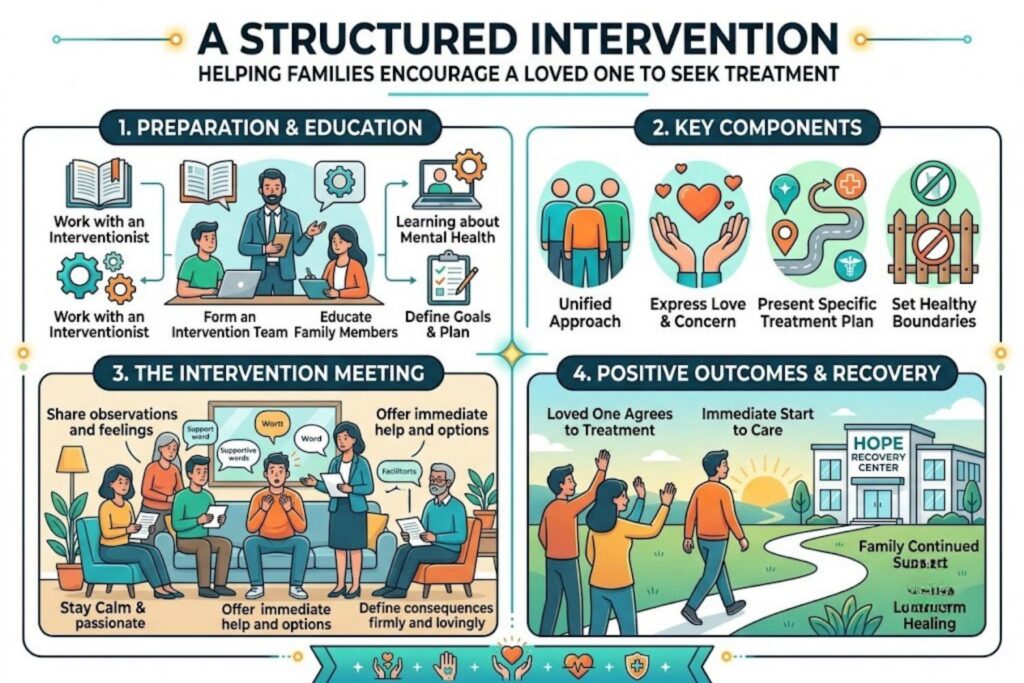
Watching someone you love struggle with substance abuse can be heartbreaking. Many families spend months—or even years—hoping the situation will improve on its own. Unfortunately, addiction rarely resolves without professional support. In many cases, early action can make a meaningful difference. A substance abuse intervention is a structured conversation designed to encourage a person with a substance use disorder to accept treatment. When carefully planned and guided by experienced professionals, an intervention can help families communicate concern without blame while presenting a clear path toward recovery. This guide explains how interventions work, when they are appropriate, how to prepare effectively, and what steps families can take after the intervention—regardless of the outcome. What Is a Substance Abuse Intervention? Quick Answer A substance abuse intervention is a planned meeting where family members, close friends, and often a professional interventionist come together to encourage a loved one to seek treatment for drug or alcohol addiction. The goal is to express concern, provide support, and present a treatment plan in a respectful, organized manner. Unlike dramatic portrayals in television shows, effective interventions are not about confrontation or humiliation. They are carefully prepared conversations focused on helping the individual recognize the impact of their addiction and make an informed decision to accept professional help. A successful intervention prioritizes compassion, preparation, and clear communication. Why Substance Abuse Interventions Matter Substance use disorders affect much more than the individual. They often influence relationships, finances, employment, physical health, and emotional well-being across the entire family. Without intervention, addiction may become progressively more severe, increasing the risk of: Intervening early may improve the likelihood of entering treatment before these consequences become more severe. When Is an Intervention Necessary? Many families ask themselves: “How bad does it have to get before we intervene?” The answer is often simpler than expected. You do not have to wait until someone loses their job, experiences homelessness, or survives an overdose. An intervention may be appropriate when substance use consistently causes harm to the individual or those around them. Warning Signs Consider professional guidance if your loved one: Even if only several of these warning signs are present, seeking advice from an intervention professional may help determine the best course of action. Why Families Often Wait Too Long Many loved ones delay intervention because they fear damaging the relationship or worry that the individual will become angry. Common thoughts include: These beliefs are understandable, but they can unintentionally delay treatment. Addiction often progresses gradually, making each new problem seem like an isolated event rather than part of a larger pattern. Recognizing this pattern early allows families to respond before the risks escalate further. Types of Substance Abuse Interventions There is no one-size-fits-all approach. The right intervention depends on the individual’s circumstances, family dynamics, and level of readiness for treatment. Traditional Intervention A structured meeting led by a trained interventionist in which participants prepare statements, establish healthy boundaries, and present a treatment plan. Best for: Family System Intervention This approach focuses on changing unhealthy family dynamics alongside encouraging treatment. Rather than concentrating solely on the individual, it recognizes that addiction often affects—and is affected by—the entire family system. Motivational Approach Instead of direct confrontation, this method uses empathy, open-ended questions, and reflective listening to help the individual explore their own reasons for change. It is particularly useful when someone is ambivalent about seeking help. Crisis Intervention Sometimes immediate action is necessary after events such as: In these situations, intervention planning should occur alongside qualified healthcare or emergency professionals whenever possible. Professional vs. Family-Led Intervention Professional Intervention Family-Led Intervention Objective guidance Emotionally challenging Structured planning Often spontaneous Manages conflict Conflict may escalate Coordinates treatment Treatment planning varies Prepares family Limited preparation Improves communication May become emotional Helps maintain focus Conversation may drift For families dealing with long-term addiction, repeated treatment refusals, or complex relationships, involving a professional interventionist can provide valuable structure and support. How to Plan a Successful Substance Abuse Intervention A successful intervention begins well before anyone gathers in the same room. Careful preparation helps reduce emotional reactions, keeps the conversation focused, and gives your loved one the best opportunity to consider treatment. Step 1: Consult a Professional Before speaking with your loved one, consider contacting an experienced interventionist, addiction counselor, or treatment provider. A professional can help you: Expert Tip: If your loved one has a history of violence, severe mental illness, suicidal behavior, or multiple failed treatment attempts, seek professional guidance before organizing an intervention. Step 2: Build the Right Team Keep the group small and focused. Include only people your loved one trusts and respects. Good participants may include: Avoid inviting people who: Step 3: Prepare What You’ll Say Each participant should write a brief statement that: Use facts rather than accusations. For example: ✔️ “I was worried when you missed your daughter’s graduation because you were intoxicated.” Instead of: ❌ “You never care about anyone but yourself.” Step 4: Arrange Treatment Before the Meeting One of the most common mistakes is asking someone to seek help without having a plan in place. Before the intervention: If your loved one agrees, they should be able to enter treatment as soon as possible. What Happens During an Intervention? Although every intervention is different, most follow a similar structure. Typical Process The goal is not to “win” an argument. The goal is to present a unified, supportive path toward recovery. What Happens After the Intervention? The intervention itself is only the beginning. If They Accept Treatment Act quickly. Ideally, they should transition directly into: The first few days after agreeing to treatment are often critical. Delays can increase the likelihood of changing their mind. If They Refuse Treatment A refusal does not necessarily mean the intervention failed. Many people enter treatment days or weeks later after reflecting on the conversation. Families should: Consistency is often more effective than repeated arguments. Common Mistakes That Can Cause an Intervention to Fail Avoid these common pitfalls: Mistake Better Approach Waiting for “rock bottom” Address
Alcohol Interventionist: What They Do, When to Hire One, and How They Help Families

Alcohol addiction affects more than the individual who drinks. It changes family relationships, damages trust, impacts careers, and can create serious health and safety concerns. When repeated conversations, promises, and ultimatums fail, many families begin searching for an alcohol interventionist to help them navigate the situation professionally. A skilled interventionist provides structure, guidance, and emotional support during one of the most difficult conversations a family may ever have. Rather than confronting a loved one with anger or blame, an intervention is carefully planned to encourage treatment while protecting everyone involved. This guide explains what an alcohol interventionist does, when you should consider hiring one, what to expect throughout the process, and how to choose the right professional for your family’s needs. What Is an Alcohol Interventionist? Quick Definition (Featured Snippet Opportunity) An alcohol interventionist is a trained professional who helps families organize and conduct a structured conversation encouraging someone with alcohol use disorder to accept treatment. They prepare participants, manage emotions during the intervention, and help coordinate admission into an appropriate treatment program when the individual agrees to seek help. Unlike family members, interventionists remain objective and focus on creating the best possible environment for a productive discussion. What Does an Alcohol Interventionist Do? Many people assume an interventionist simply shows up on the day of the meeting. In reality, most of their work happens before and after the intervention. Before the Intervention A professional interventionist typically: Preparation is often the difference between an emotional confrontation and a productive conversation. During the Intervention During the meeting, the interventionist acts as a neutral facilitator by: Their experience helps maintain focus even when emotions run high. After the Intervention Support does not necessarily end once the intervention concludes. An interventionist may assist with: Recovery is a long-term process, and ongoing support often improves outcomes. Signs It May Be Time to Hire an Alcohol Interventionist Families often wait until the situation becomes overwhelming before seeking professional help. Consider contacting an alcohol interventionist if your loved one: Professional guidance can help prevent further escalation. Benefits of Hiring an Alcohol Interventionist 1. Professional Objectivity Family members naturally bring years of emotional history into conversations. An interventionist remains neutral and focused on solutions. 2. Reduced Emotional Conflict Without professional guidance, interventions often become arguments. Experienced interventionists know how to redirect conversations before they become destructive. 3. Better Preparation Families frequently underestimate the planning involved. Professional preparation includes: 4. Immediate Treatment Coordination The best time for treatment is often immediately after the individual agrees. Many interventionists coordinate admission beforehand so there are no delays. Family-Led Intervention vs. Professional Intervention Family-Led Professional Intervention Emotional conversations Structured discussions Limited planning Detailed preparation Higher risk of conflict Neutral facilitation Treatment arranged afterward Treatment planned beforehand Family manages emotions Professional guidance Different Types of Alcohol Interventions Not every situation requires the same approach. Johnson Model The classic intervention where family and friends meet together to encourage immediate treatment. Best suited for: ARISE Model A gradual, collaborative process involving ongoing family participation before a formal intervention becomes necessary. Useful when: Love First Model Focuses on compassion while maintaining accountability. Families communicate concern without judgment while clearly outlining consequences if treatment is refused. How to Choose the Right Alcohol Interventionist Not every intervention professional has the same training or experience. Consider asking: What experience do you have with alcohol addiction? Experience with alcohol-specific interventions matters because alcohol withdrawal can involve unique medical risks. What intervention model do you use? Different families benefit from different approaches. A qualified interventionist should explain why a particular method fits your situation. Will you help arrange treatment? The intervention should include a clear next step. Many professionals coordinate directly with treatment facilities. Do you provide family support afterward? Recovery affects the entire family—not just the individual entering treatment. Questions to Ask Before Hiring What Happens During an Alcohol Intervention? Although every case differs, most interventions follow a similar structure. Planning every step in advance reduces uncertainty during an emotional time. Common Mistakes Families Make Avoid these common pitfalls: ❌ Waiting until a crisis occurs ❌ Threatening consequences you won’t enforce ❌ Arguing about past behavior ❌ Holding an intervention without preparation ❌ Choosing a treatment center after the intervention ❌ Including people who may disrupt the process Professional guidance helps families avoid these mistakes. Does an Alcohol Intervention Always Work? No intervention can guarantee that someone will immediately accept treatment. However, even when a person initially refuses help, a well-planned intervention can: Success is not measured only by immediate admission into rehab but also by creating meaningful change within the family system. Key Takeaways Call to Action If someone you love is struggling with alcohol addiction, waiting for them to “hit rock bottom” can increase the risk of serious health, legal, and relationship consequences. Speaking with an experienced alcohol interventionist can help your family understand the available options, prepare thoughtfully, and take the next step toward treatment and recovery. Whether you’re exploring professional guidance or simply looking for reliable information, learning about the intervention process is an important first step toward helping your loved one—and supporting your family through recovery.